In-Office vs. At-Home Teeth Whitening: Which Is Right for You?

Discoloration from coffee, tea, red wine, or natural aging is common, and many people in Saskatoon consider whitening to brighten their smile. If you are exploring teeth whitening in Saskatoon, it helps to understand how the two main approaches work, what they involve, and how a general dentist can help you decide based on your oral health.
How Teeth Whitening Works
Most whitening products use hydrogen peroxide or carbamide peroxide. Carbamide peroxide breaks down into hydrogen peroxide in the mouth. The peroxide releases oxygen molecules that move through tiny pores in enamel and reach the dentin layer. There, it breaks apart coloured molecules called chromogens into smaller, lighter pieces.
This process does not remove enamel. It changes how light reflects through the tooth, which makes the tooth appear lighter. Results vary based on the type of stain, starting shade, and whether you have existing restorations. Fillings, crowns, and veneers do not whiten.
According to the Canadian Dental Association, whitening should be considered after an oral assessment to check for cavities, cracked teeth, or gum concerns that should be addressed first.
In-Office Teeth Whitening At A Dental Clinic In Saskatoon
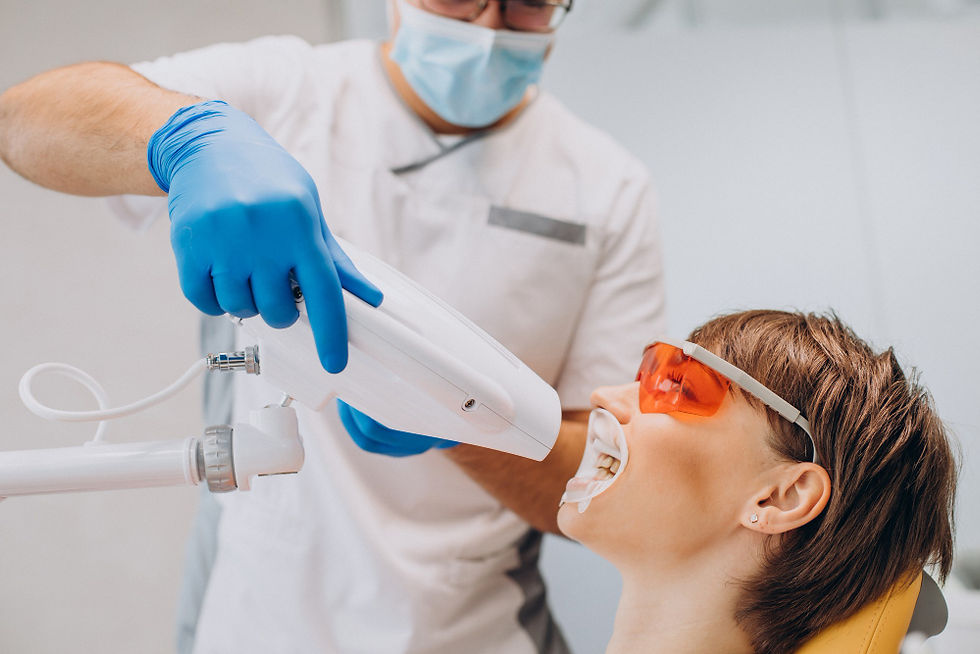
In-office whitening is completed during a scheduled appointment at a dental clinic in Saskatoon. A general dentist supervises the entire procedure.
What To Expect During The Appointment
The visit often starts with a shade record, professional polishing to remove surface plaque, and protection for gums and soft tissues. A higher concentration peroxide gel is applied to the teeth. The gel is typically applied in intervals, often 15 minutes at a time, for a total of 60 to 90 minutes.
Some systems use a light to help activate the gel, though research suggests the light itself does not change final results. You leave the appointment with teeth that look visibly lighter, often several shades lighter in one visit.
Potential Benefits And Considerations
Speed: Many patients notice a difference after a single appointment. This can be helpful before an event or photos.
Supervision: The dentist can monitor gum response, manage sensitivity, and check if whitening is appropriate for your case.
Temporary sensitivity: Short-term tooth sensitivity and mild gum tenderness are common and often settle within 24 to 72 hours. Using a toothpaste with potassium nitrate before the appointment, as recommended by your dentist, can help.
Because in-office products use stronger concentrations, this option is done only in a clinical setting with protective measures.
At-Home Whitening Options
At-home whitening takes longer and uses lower concentrations of peroxide. There are two main categories.
Dentist-Supervised Take-Home Trays
Your general dentist takes impressions or digital scans and provides custom trays that fit your teeth. You add a prescribed gel to the trays and wear them for a set time each day, often 30 minutes to a few hours, for one to two weeks. Because the trays are made for you, gel contact is more even and less likely to spread onto gums compared to generic trays.
Your dentist can discuss concentration, wear time, and how to handle sensitivity. Results build gradually and can be maintained with periodic touch-ups as advised.
Over-the-Counter Products
Drugstore options include whitening strips, prefilled trays, and whitening toothpastes. Strips contain a thin layer of peroxide gel. Toothpastes mainly polish away surface stains with abrasives and do not change the intrinsic colour of teeth.
Over-the-counter kits are convenient and cost less up front, but they offer less customization, may not reach all tooth surfaces evenly, and do not include an assessment of oral health before use.
Key Differences To Consider
When comparing options, these factors often guide the decision:
Concentration and time: In-office uses higher concentration for faster change. At-home uses lower concentrations over days or weeks.
Customization: Custom trays from a dental clinic fit your bite. Generic trays may be loose and allow gel to leak.
Sensitivity management: In-office care includes real-time monitoring. At-home care relies on instructions, lower concentration, and shorter wear time if sensitivity occurs.
Longevity: No whitening is permanent. Teeth continue to absorb pigments from food and drinks. With routine preventive dental services in Saskatoon like cleanings and good home care, results can be maintained longer. Many patients need maintenance.
Suitability: Not all discoloration responds to peroxide. Grey tones from certain medications, discolouration from trauma, or stains around old fillings may need other options. A general dentist can explain what whitening can and cannot help with and discuss referral options when specialized care is required.
Which Option May Be Suitable For You?
The right choice depends on your oral health, timeline, budget, and comfort with trays.
You may prefer in-office whitening if you want noticeable change quickly and want the procedure supervised. You may prefer custom take-home trays if you prefer gradual whitening at home and the ability to do touch-ups.
If you have active cavities, gum concerns, exposed roots, or a history of significant sensitivity, an assessment comes first. Your dentist can recommend treatment for those concerns before whitening.
For patients considering cosmetic dentistry in Saskatoon, whitening is often one part of a larger plan that includes preventive care, restorative dentistry when needed, and oral health maintenance. A discussion with licensed dentists at AspenGreen Dental can help you review benefits, risks, and estimated costs so you can make an informed decision based on individual needs and clinical findings. You can also review general information from the Canadian Dental Association about whitening procedures.
AspenGreen Dental is a general dental practice in Saskatoon providing preventive and restorative services for families and adults. Care is provided by licensed professionals using modern dental equipment to support assessment and treatment planning, with clear communication about options.
Key Takeaway
In-office and at-home whitening use the same active ingredients but differ in concentration, speed, and supervision. In-office treatment offers faster visible change during one or two appointments. Custom take-home trays offer gradual whitening with more flexibility. Over-the-counter products offer convenience but less customization and no clinical assessment.
If you are deciding on teeth whitening in Saskatoon, start with an oral health assessment to confirm whitening is appropriate for you. Book a consultation with AspenGreen Dental, a trusted dental clinic in Saskatoon located at 1164 Baltzan Blvd #60, Saskatoon, SK S7W 1K4, to discuss what may be suitable for your needs.
FAQs
How long does teeth whitening last?
Results are not permanent. Depending on diet, oral hygiene, and smoking habits, in-office results may last one to three years with maintenance. At-home results may last several months to a year. Regular cleanings and limiting staining foods and drinks can help extend results.
Does teeth whitening cause sensitivity?
Some people experience temporary sensitivity to cold or mild gum tenderness during or after whitening. It often improves within a day or two. Your general dentist can suggest lower-concentration gel, shorter wear time, and desensitizing toothpaste if needed.
Can everyone whiten their teeth?
No. Whitening is not recommended if you have untreated cavities, active gum concerns, or very sensitive exposed roots. Crowns, veneers, bonding, and fillings do not change colour with peroxide. A clinical assessment helps determine if whitening is appropriate.
What is the difference between hydrogen peroxide and carbamide peroxide?
Both are peroxide-based. Hydrogen peroxide acts more quickly. Carbamide peroxide breaks down into hydrogen peroxide and urea, which makes it more stable and slower acting. Dentists select concentration and type based on whether treatment is in-office or at-home.
Is at-home whitening safe without a dental visit?
Over-the-counter products can be used as directed, but they do not replace an oral assessment. An exam can identify issues that should be treated first and help you avoid uneven results or irritation. Dentist-supervised trays offer custom fit and guidance based on your clinical findings.


Comments